
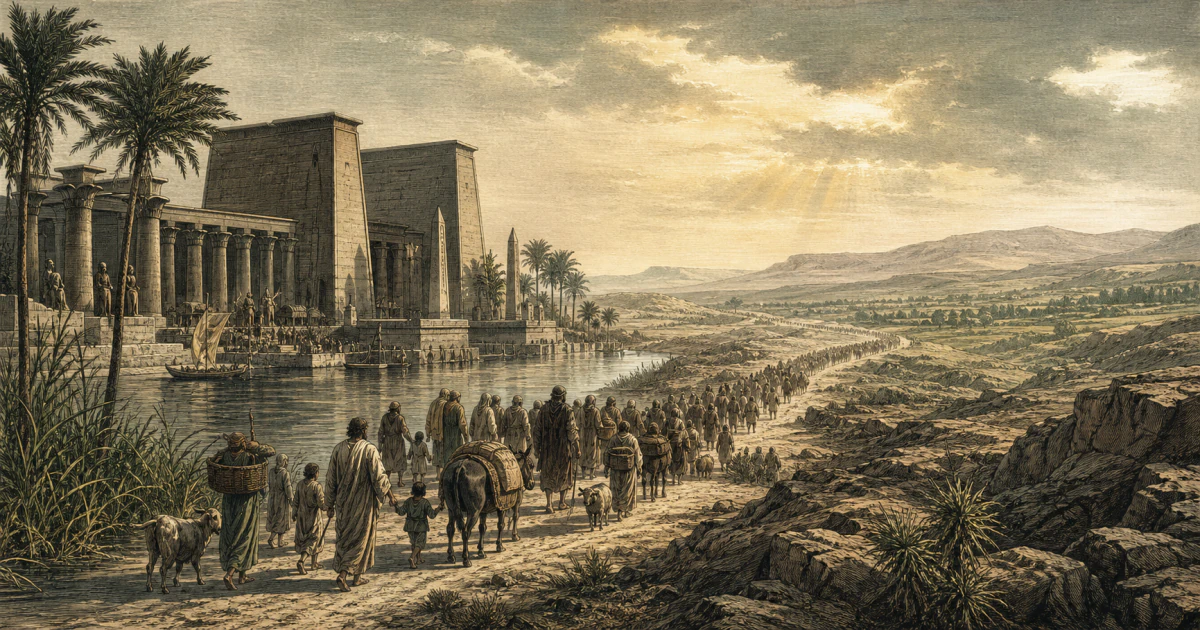
The Pharaoh Moses Fled
The last article left Moses in Midian. He had rejected permanent identification with Pharaoh's house, killed an Egyptian who was beating a Hebrew, and fled from the king who wanted him dead.
Before God sends Moses back, Exodus reports that the king of Egypt died.
That detail cannot name the king by itself, but it gives us a real historical filter. The Pharaoh Moses fled must be reigning when Moses leaves Egypt and dead before Moses returns. Under the high 18th Dynasty chronology defended in Part 4, Thutmose III fits that interval and Amenhotep II follows him into the Exodus window.
The attraction is not merely that Thutmose III had a long reign. The attraction is where that reign begins and ends in relation to Moses' forty years in Midian.
The Bible Says
The crisis begins when Moses openly identifies the afflicted Hebrews as his brethren:
Chapter 2, verse 11: 2:11And it came to pass in those days, when Moses was grown, that he went out unto his brethren, and looked on their burdens: and he spied an Egyptian smiting an Hebrew, one of his brethren. Chapter 2, verse 12: 2:12And he looked this way and that way, and when he saw that there was no man, he slew the Egyptian, and hid him in the sand. Chapter 2, verse 13: 2:13And when he went out the second day, behold, two men of the Hebrews strove together: and he said to him that did the wrong, Wherefore smitest thou thy fellow? Chapter 2, verse 14: 2:14And he said, Who made thee a prince and a judge over us? intendest thou to kill me, as thou killedst the Egyptian? And Moses feared, and said, Surely this thing is known. Chapter 2, verse 15: 2:15Now when Pharaoh heard this thing, he sought to slay Moses. But Moses fled from the face of Pharaoh, and dwelt in the land of Midian: and he sat down by a well.
Moses' Egyptian education has not erased his Hebrew allegiance. He intervenes for one of his people, but his first attempt at deliverance ends in blood, fear, and exile. Pharaoh hears of the killing and personally seeks Moses' life.
Stephen supplies the first age marker:
And when he was full forty years old, it came into his heart to visit his brethren the children of Israel.
Moses is forty when he visits his brethren. Stephen then says that he flees to Midian and that another forty years expire before the angel appears in the burning bush (Acts 7:29–30Chapter 7, verse 29: 7:29Then fled Moses at this saying, and was a stranger in the land of Madian, where he begat two sons. Chapter 7, verse 30: 7:30And when forty years were expired, there appeared to him in the wilderness of mount Sina an angel of the Lord in a flame of fire in a bush.). Exodus places a royal death inside that absence:
And it came to pass in process of time, that the king of Egypt died: and the children of Israel sighed by reason of the bondage, and they cried, and their cry came up unto God by reason of the bondage.
The Lord later tells Moses why he may return:
And the LORD said unto Moses in Midian, Go, return into Egypt: for all the men are dead which sought thy life.
The plural matters. Exodus 4:19 says that all the men who sought Moses' life are dead, while Exodus 2:23 singles out the death of the king of Egypt. We should not reduce the danger to Pharaoh alone, but neither should we treat the king's death as decorative scenery. It belongs to the logic of the return.
The working dates follow from the chronology already established. Moses is born around 1526 BC, flees from Pharaoh at age forty around 1486 BC, and returns to confront the Exodus Pharaoh at age eighty around 1446 BC.
The explicit requirement is therefore modest and firm: the flight Pharaoh must be reigning around 1486 BC and must die before Moses returns around 1446 BC.
Scripture does not say that the same Pharaoh must live through all forty years of Moses' exile. It does not tell us how many years separate the king's death from the burning bush. That distinction will keep a narrative preference from masquerading as an additional verse.
Two Egyptian Placements, Two Different Pharaohs
The same biblical dates generate different candidates depending on where the 18th Dynasty is placed.
University College London's conventional chronology places Thutmose III around 1479–1425 BC.1 On that timetable, Moses' flight around 1486 comes before Thutmose III's accession, during the reign of Thutmose II. A 1446 Exodus then falls during Thutmose III's reign.
That makes Thutmose II, not Thutmose III, the conventional chronology's flight Pharaoh. Thutmose II reigns at the calculated flight date and dies before Moses' return. He satisfies the explicit biblical requirement.
The selected high reconstruction places Thutmose III around 1504–1450 BC.2, chap. 2 and appendix 1 On that timetable, he is reigning when Moses flees around 1486 and dies before the return around 1446. Amenhotep II then occupies the next royal position to be tested.
Put side by side, the conventional model places Thutmose II at the flight, his death around 1479 BC, and Thutmose III in the 1446 BC Exodus window. The selected high model places Thutmose III at the flight, his death around 1450 BC, and Amenhotep II in the Exodus window.
Both placements satisfy the bare death-before-return requirement. Only the second produces Thutmose III as the Pharaoh Moses fled.
That admission does not weaken the comparison. It tells us exactly what kind of argument we are making. Scripture supplies the filter; the Egyptian chronology determines which name enters it.
What Egypt Actually Preserves
The Egyptian evidence gives us a firm relative sequence even while the absolute BC dates remain disputed.
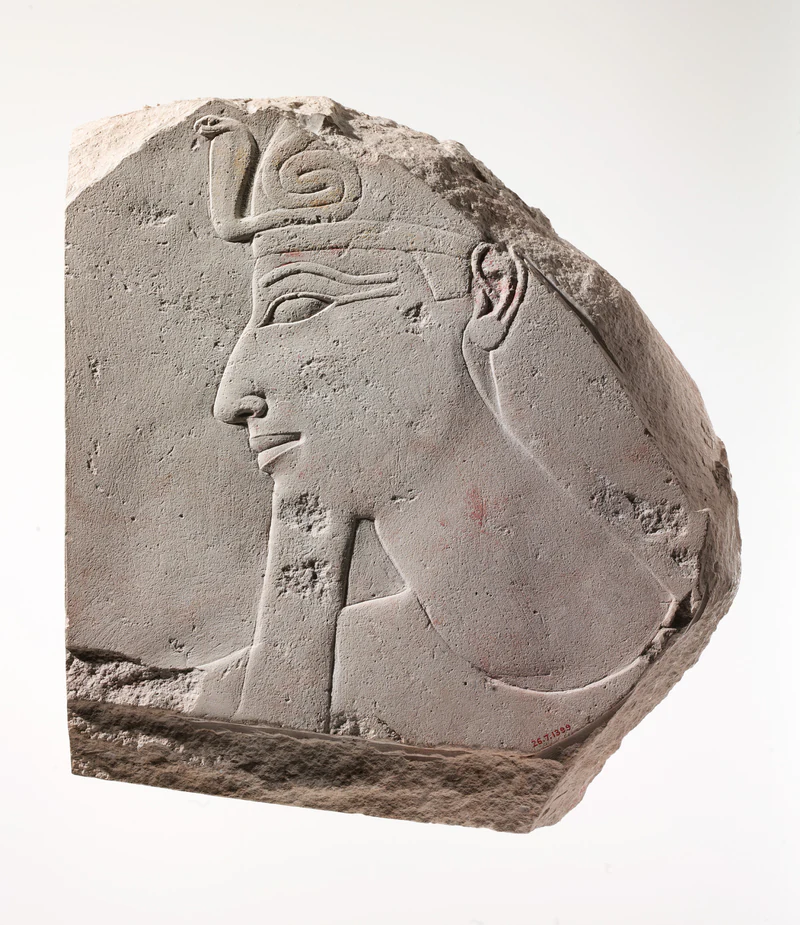
This painted limestone relief, probably from Thutmose III's valley temple, shows the king wearing a khat headcloth and royal uraeus.
In Breasted's translation of the tomb biography of the military officer Amenemhab, the text says that Thutmose III completed a reign extending into Year 54 and then "mounted to heaven" and joined the sun. The continuation opens on the following morning with Amenhotep II being established on his father's throne.3, §§592, 808–809
That source does two useful things. It confirms the long regnal span of Thutmose III, and it gives us the succession from Thutmose III to Amenhotep II. It does not print "1450 BC" beside the death notice. Placing Year 54 on an absolute calendar requires the chronology work examined in Part 4.
The historical claim and the chronological reconstruction must therefore travel together without becoming confused:
Egyptian evidence gives us a long-reigning Thutmose III whose death is followed by Amenhotep II. The selected high chronology places that death near the end of Moses' Midian exile.
That is substantial. It is also properly bounded.
Why I Prefer The High-Chronology Fit
Exodus says that "in process of time" the king dies, then turns immediately to Israel's groaning and God's remembrance of his covenant (Exodus 2:23–25Chapter 2, verse 23: 2:23And it came to pass in process of time, that the king of Egypt died: and the children of Israel sighed by reason of the bondage, and they cried, and their cry came up unto God by reason of the bondage. Chapter 2, verse 24: 2:24And God heard their groaning, and God remembered his covenant with Abraham, with Isaac, and with Jacob. Chapter 2, verse 25: 2:25And God looked upon the children of Israel, and God had respect unto them.). The burning-bush commission follows in chapter 3, and the Lord's assurance that Moses' enemies are dead comes while Moses is still in Midian (Exodus 4:19And the LORD said unto Moses in Midian, Go, return into Egypt: for all the men are dead which sought thy life.).
I find that sequence more naturally read as a death that helps prepare the way for Moses' return, rather than a death more than three decades earlier. Under conventional dates, Thutmose II dies about thirty-three years before the return. Under the selected high chronology, Thutmose III dies about four years before it.
That is a judgment about narrative fit, not an explicit forty-year reign requirement. Exodus can compress decades into a few sentences, and Thutmose II remains a possible flight Pharaoh under conventional dates. The text does not forbid a long interval.
The high chronology nevertheless fits the narrative movement more closely in my estimation. Moses flees during Thutmose III's long reign. That king dies near the end of the exile. The Lord sends Moses back. Amenhotep II stands on the throne when he arrives.
What About A Ramesside Exodus?
While we are testing the Pharaoh Moses fled, a Ramesside Exodus deserves the same calculation. We cannot simply name Sety I because he preceded Ramesses II. Moses fled forty years before the Exodus, so each proposed Exodus date must generate its own flight Pharaoh.
James Hoffmeier proposes an Exodus around 1270–1260 BC. In an interview recorded in 2002, Kenneth Kitchen gives his estimate as "about 1250, 1260 BC in the heart of the reign of Rameses." The comparison below applies the same forty-year subtraction to those sampled dates; it is not an exhaustive survey of every Ramesside chronology.4, p. 225; 5, The Date of the Exodus
Using University College London's New Kingdom chronology as one consistent conventional baseline produces the following comparison.6
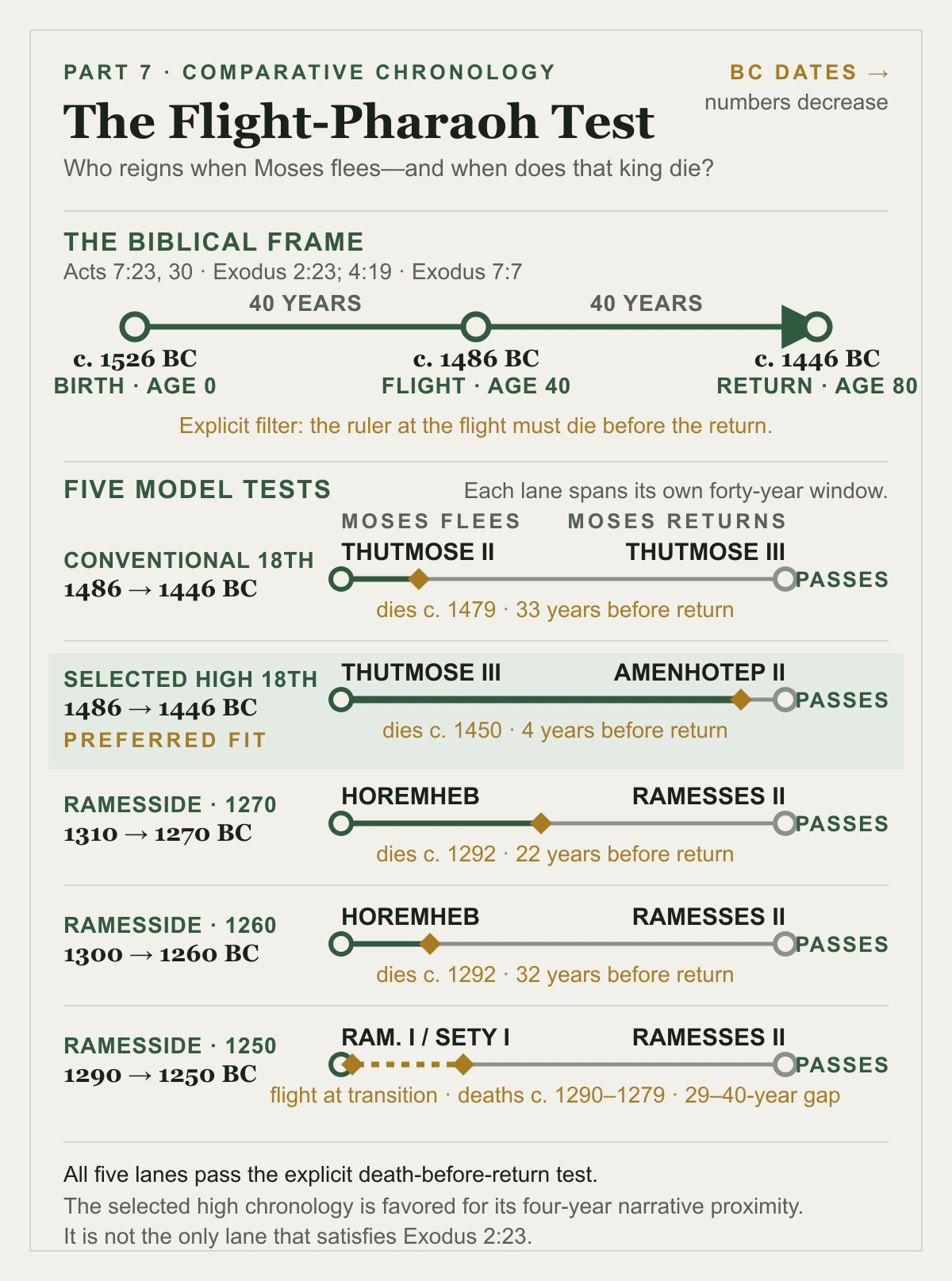
None of those results excludes the proposed date. Horemheb and both rulers at the 1290 transition die before the corresponding return, so all three pass the explicit requirement in Exodus 2:23And it came to pass in process of time, that the king of Egypt died: and the children of Israel sighed by reason of the bondage, and they cried, and their cry came up unto God by reason of the bondage.. They do not produce the same narrative fit I see in the selected high chronology: their royal deaths fall roughly twenty-two to forty years before the proposed return, rather than about four. That remains a preference based on the movement of the narrative, not an additional biblical rule.
The Ramesside proposals will face other tests later in the series. Part 9 will examine the timing of Ramesses II's firstborn son, and Part 11 will compare each date's entry into Canaan with Israel's appearance on Merneptah's monument. The flight test itself leaves these dates open.
The Curmudgeon Says
The death of the king is not chronological packing material. Exodus places it between Moses' flight and return because it matters to the story.
Under conventional Egyptian dates, Thutmose II passes that test. The sampled Ramesside dates also produce kings who die before Moses' return. Under the high chronology, Thutmose III passes it and does so in a way I find more consonant with the narrative sequence. His death comes near the end of the exile, and his successor becomes the king Moses confronts.
That does not make Thutmose III a name secretly encoded in Exodus. It makes him the candidate generated when the biblical dates are applied to a published higher placement of the 18th Dynasty and then checked against an Egyptian Year 54 death and succession notice.
History rarely has the manners to behave like algebra. Here, however, the equation keeps producing historically recognizable people in the required places.
Thutmose I at Moses' birth. Hatshepsut in the royal household. Thutmose III at the flight. Amenhotep II waiting at the return.
One fit may be coincidence. A sequence of fits asks for attention.
Coming Up
Part 8 brings Moses back to Egypt and asks whether Amenhotep II is the Pharaoh who heard the words, "Let my people go."
Discussion
Thoughtful, good-faith discussion is welcome.
Loading comments…