
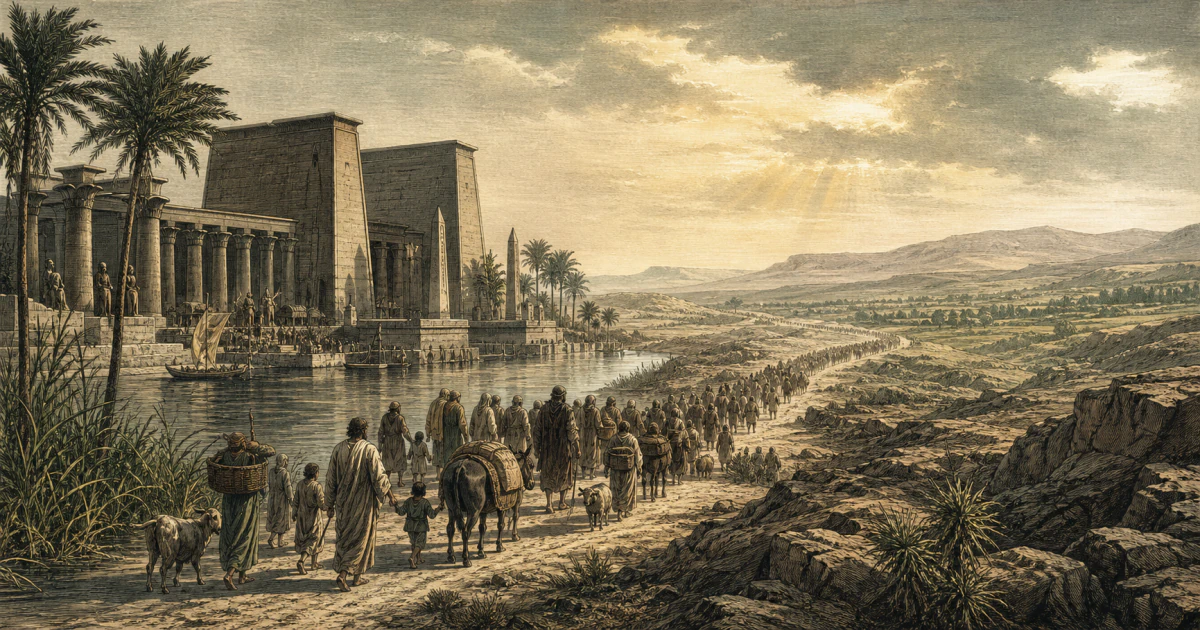
The Pharaoh At Moses' Birth
The last article dealt with a city name. This one deals with the king at the river.
Exodus gives us Pharaoh's fear, his policy, and his cruelty. It does not give us his birth name, throne name, mummy tag, or museum label. Before we start putting crowns on people, we must distinguish two questions: who began the turn against Joseph's people, and who ruled when that oppression reached the river and Moses entered the story?
Those may be the same king. Exodus does not require them to be.
This article concentrates on the second question. If the Exodus belongs around 1446 BC, Moses was born around 1526 BC. Under the particular high 18th Dynasty reconstruction used in this series, that date falls in the reign of Thutmose I.
The identification depends on the timetable. So before Thutmose I gets the part, the timetable needs to show its work.
The Bible Says
Exodus opens the crisis with a new king and a new political calculation:
Chapter 1, verse 8: 1:8Now there arose up a new king over Egypt, which knew not Joseph. Chapter 1, verse 9: 1:9And he said unto his people, Behold, the people of the children of Israel are more and mightier than we: Chapter 1, verse 10: 1:10Come on, let us deal wisely with them; lest they multiply, and it come to pass, that, when there falleth out any war, they join also unto our enemies, and fight against us, and so get them up out of the land.
Pharaoh is not merely annoyed by Israel. He is afraid of Israel. His fear is demographic, political, and military. Israel is multiplying. Israel might join Egypt's enemies. Israel might fight. Israel might leave.
He answers first with state policy. Taskmasters afflict the people, and they build Pithom and Raamses (Exodus 1:11Therefore they did set over them taskmasters to afflict them with their burdens. And they built for Pharaoh treasure cities, Pithom and Raamses.). Their lives are made bitter with rigorous bondage (Exodus 1:14And they made their lives bitter with hard bondage, in morter, and in brick, and in all manner of service in the field: all their service, wherein they made them serve, was with rigour.). Yet the more Egypt afflicts them, the more they multiply.
Then the policy becomes murderous:
Chapter 1, verse 15: 1:15And the king of Egypt spake to the Hebrew midwives, of which the name of the one was Shiphrah, and the name of the other Puah: Chapter 1, verse 16: 1:16And he said, When ye do the office of a midwife to the Hebrew women, and see them upon the stools; if it be a son, then ye shall kill him: but if it be a daughter, then she shall live.
The midwives fear God and refuse. Pharaoh then turns the failed covert order into a public command:
And Pharaoh charged all his people, saying, Every son that is born ye shall cast into the river, and every daughter ye shall save alive.
That progression matters. We are not merely looking for an era when Egypt used forced labor. We are looking for the reign that fits the male-child crisis into which Moses was born.
Moses was eighty at the Exodus (Exodus 7:7And Moses was fourscore years old, and Aaron fourscore and three years old, when they spake unto Pharaoh.). With the Exodus around 1446 BC, his birth belongs around 1526 BC. That dates the river decree. It does not necessarily date the beginning of every policy in the chapter.
The "new king" of Exodus 1:8Now there arose up a new king over Egypt, which knew not Joseph. may introduce a turn that develops across more than one reign. A new royal posture toward Israel can begin, forced labor can intensify, and the attempt to destroy the male children can follow. Biblical narrative often compresses years into a few sentences without attaching a fresh royal name to every transition.
I therefore will not quietly make Thutmose I the first author of every anti-Israel measure. He is being tested as the Pharaoh at Moses' birth, when the policy reached the river.
Egypt Says
The opening of the 18th Dynasty followed the Hyksos period, when rulers of West Semitic origin had controlled much of northern Egypt. Ahmose I expelled them, and the early New Kingdom developed an aggressive imperial posture toward Nubia and the Near East.1
We should not identify Israel with the Hyksos. The Bible does not do so, and the histories are not interchangeable. The point is political context. A Pharaoh looking at a growing Semitic population in the eastern Delta and worrying that it might join Egypt's enemies belongs to an intelligible post-Hyksos world.
That is a fit of setting, not an Egyptian confession that Exodus 1 happened.
Thutmose I belongs to this early 18th Dynasty world. He campaigned in Nubia and Syria, extended Egyptian power, and left a Year 2 victory inscription at Tombos on the Nubian frontier.2 The Thesaurus Linguae Aegyptiae identifies the granite stela in situ at Tombos and records its Year 2 date and Thutmose I's full royal titulary.3
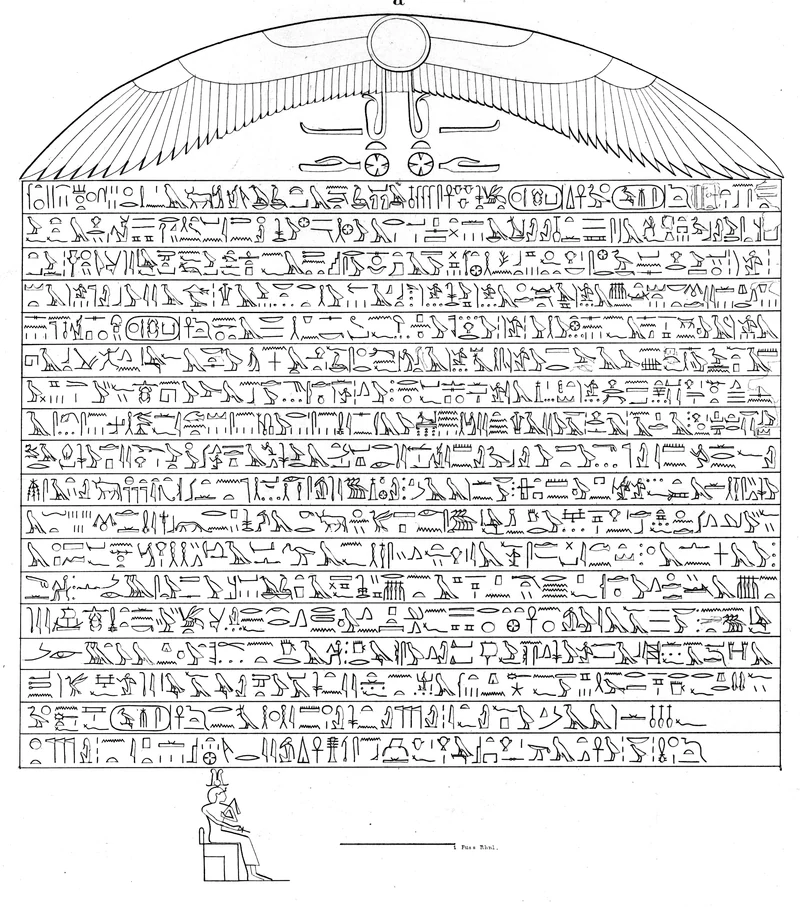
Lepsius's nineteenth-century drawing records the full composition of Thutmose I's Year 2 rock inscription at Tombos.
Breasted's translation presents victory in Nubia, the establishment of a fortress and station for royal troops, and expansive claims reaching toward the Euphrates. He also warns that the composition is a victory hymn rather than a sober campaign report.4, vol. 2, §§67–73
That is useful evidence for Thutmose I's imperial posture. It is not the missing decree against Hebrew babies.
The chronological problem is sharper. University College London's conventional table places Thutmose I around 1504–1492 BC, too late for a Moses birth around 1526.2 Under the higher sequence used here, Thutmose I is placed around 1529–1516 BC. That puts the birth crisis inside his reign.
This is why Egyptian chronology cannot remain a decorative appendix. The same biblical date that gives us Moses' birth forces us to ask which Egyptian reconstruction preserves the sequence.
Why Use The High Chronology?
Calling a chronology "high" only tells us that it places events earlier than another reconstruction. It does not mean everyone using the label agrees on the same dates.
The working sequence in this series follows Douglas Petrovich's reconstruction in chapter 2 and appendix 1 of Origins of the Hebrews: Amenhotep I around 1550–1529, Thutmose I around 1529–1516, Thutmose II around 1516–1504, Thutmose III around 1504–1450, and Amenhotep II beginning a proposed joint reign around 1453 before ruling alone after his father's death.5, chap. 2 and appendix 1
Those dates are not produced by typing "Moses born 1526" into an Egyptian spreadsheet and dragging Pharaohs until one lands on the correct cell. They draw upon published disputes about astronomical notices, observation locations, lunar dates, regnal lengths, and coregencies.
They are also not one settled package endorsed by every scholar who has ever favored an earlier Egyptian date.
The Ebers Notice
One argument begins with a calendar notice in the Ebers Papyrus associated with Amenhotep I's ninth year. Its reference to the appearance of Sirius can connect an Egyptian civil-calendar date to an absolute date, but the result depends partly on where the observation was made.
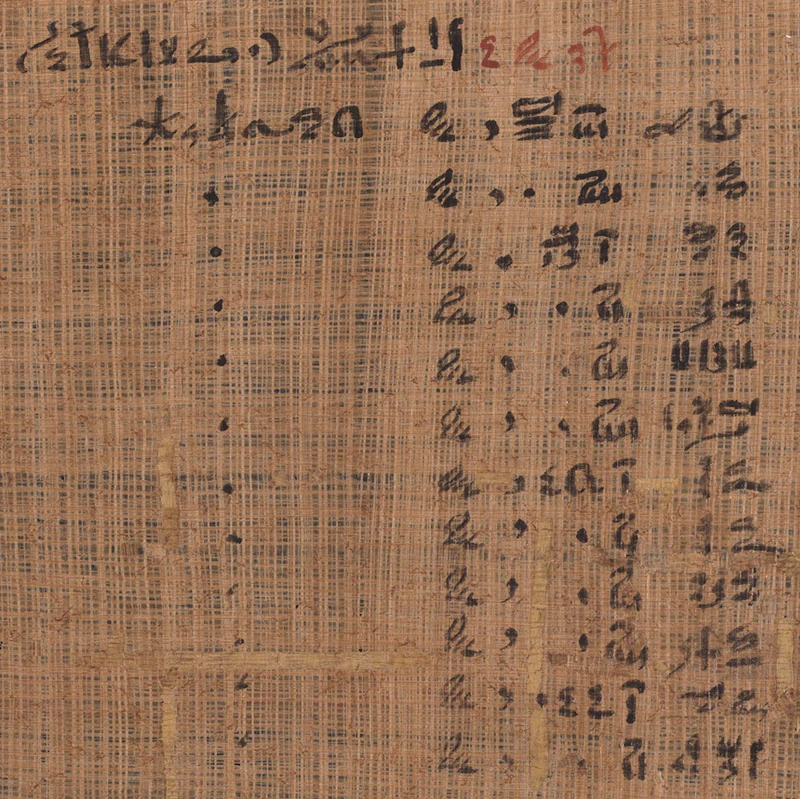
The Ebers Calendar appears on the verso of the medical papyrus; this scan presents its hieratic text upright.
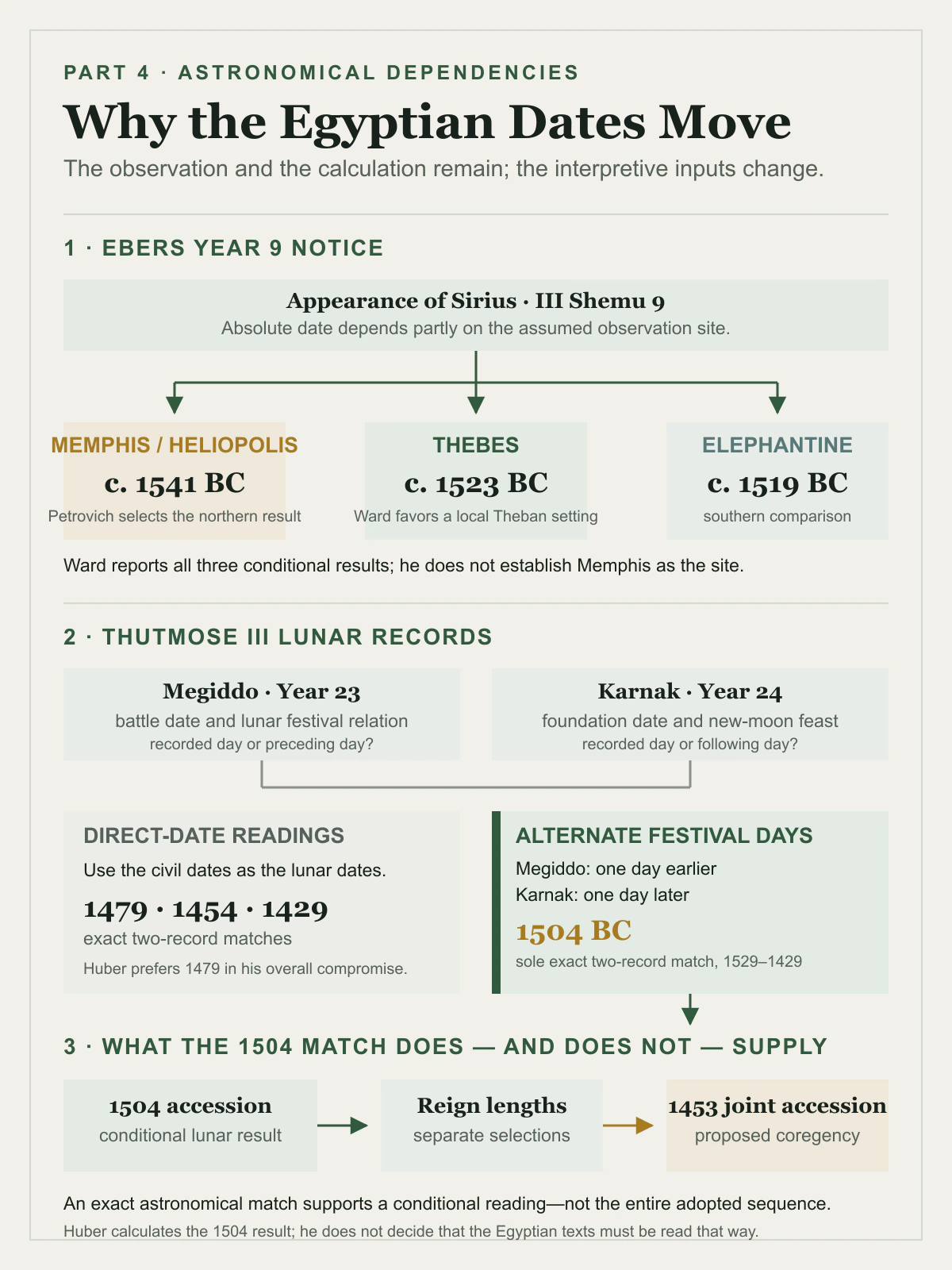
William Ward reports approximate results of 1541 BC for Memphis or Heliopolis, 1523 for Thebes, and 1519 for Elephantine. Petrovich selects the northern interpretation, places Amenhotep I's accession around 1550, and uses the intervening reign lengths to bring Thutmose I's accession to around 1529.6, pp. 58–59
That is an identifiable Egyptian argument. It is not an undisputed anchor.
Ward does not establish Memphis as the observation site. He questions the assumption that Egypt used one national observatory and favors local religious observations, placing the Ebers notice in a Theban setting. His own preference for a "high" chronology refers to a different table and cannot be borrowed as approval of Petrovich's complete sequence.6, pp. 59, 61–63
The Thutmose III Lunar Dates
A second argument comes from lunar records connected with Thutmose III's Megiddo campaign and a temple foundation at Karnak. The question being asked is specific: in what absolute BC year did Thutmose III begin his reign?
The two records give Egyptian calendar dates within Thutmose III's regnal years. If scholars can identify which day in each record corresponds to the relevant lunar event, they can test possible absolute dates for the beginning of his reign. Move the accession year, and the recorded regnal years move with it.
Peter Huber begins the lunar month on the first morning when the old moon's crescent is no longer visible. If the dates written in the Megiddo and Karnak records are taken directly as the relevant lunar dates, his calculations produce several exact matches. Those include accessions for Thutmose III in 1479, 1454, and 1429 BC. Other historical and radiocarbon considerations lead Huber to prefer 1479 among those possibilities. That is the accession year commonly found in conventional chronologies.7, pp. 191–195
The higher result appears when the Egyptian records are read differently. Some scholars place the lunar festival at Megiddo on the day before the date recorded for the battle. At Karnak, they place the relevant lunar day on the day after the recorded temple-foundation date. When Huber applies both of those alternate readings, an accession in 1504 BC becomes the only exact match for both records among the possible years he tabulates from 1529 through 1429 BC.7, pp. 191–195
So 1479 and 1504 are not dates for two different kings or two different events. They are competing absolute dates for Thutmose III's accession, produced by different judgments about how the two Egyptian texts relate their civil-calendar dates to the lunar festivals.
Our selected high reconstruction uses the 1504 accession. It gives that date real published astronomical support, but the qualification travels with it. Huber calculates the consequences of the alternate readings; he does not decide that the Egyptian texts must be read that way.
Nor does an exact astronomical match settle the whole chronology. Huber's higher combined models face difficulties involving synchronisms with neighboring kings and the radiocarbon results he discusses. He questions whether those results are tight enough to eliminate the high dates, but his preferred overall compromise returns Thutmose III's accession to 1479 BC.7, pp. 203–211
We cannot cite his favorable 1504 result and pretend the rest of the paper was eaten by crocodiles.
Why I Still Prefer The Higher Sequence
I favor the higher sequence because it has recognizable Egyptian arguments behind it and, when tested against the biblical chronology, produces the connected sequence I find most persuasive.
Scripture supplies my reason for preferring it. Scripture does not turn a disputed observation site, lunar reading, reign length, or coregency into an undisputed Egyptian fact.
Those disputes are not a surcharge paid only by the high chronology. Conventional chronologies must also decide how to interpret the same astronomical notices, regnal evidence, synchronisms, and possible coregencies. Their conclusions are more widely accepted; they are not judgment-free. The selected high reconstruction resolves some of those disputed inputs differently and produces the biblical fit I find superior.
This distinction matters. The high chronology is not a crude invention made for this series, nor did I choose it merely to obtain Amenhotep II as the Exodus Pharaoh. Published chronological models have placed Thutmose III's accession at 1504 and Amenhotep II's as early as 1453. Yet the published models differ in the reign lengths and later dates they attach to those anchors. Support for one high date does not automatically endorse every other cell in Petrovich's table.
The particular 1453 accession used here also involves a proposed coregency between Thutmose III and Amenhotep II. Scripture's requirement that the king Moses fled die before Moses returns does not itself demand overlapping reigns. The numerical model does. That dependency must remain visible when we later examine Amenhotep II.
The honest claim is substantial but bounded: this is a known family of higher Egyptian chronological arguments, and the selected reconstruction fits the biblical sequence unusually well. Its Egyptian premises remain disputed and deserve to be defended rather than smuggled past the reader.
Comparing The Clocks
Here is what the competing placements produce at the biblical checkpoints. The conventional lane follows University College London's New Kingdom table.8 The high lane follows Petrovich's early sequence. All BC dates are approximate.
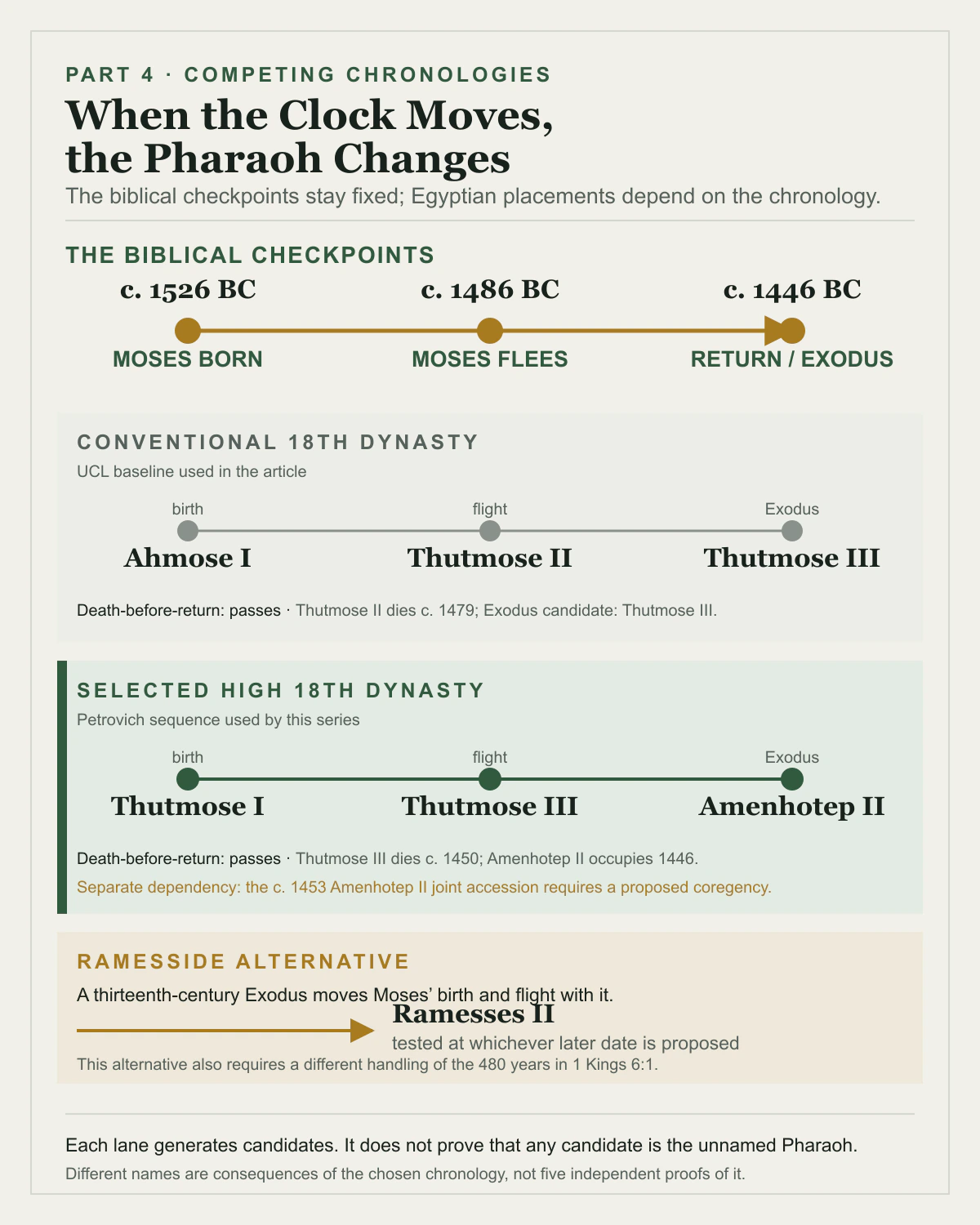
Different names along a lane are not automatically a failure. Scripture does not demand a Pharaoh named Thutmose I. Each chronology generates candidates, and each candidate must then be tested against the same biblical requirements.
Nor are the checkpoints independent proofs of the chronology. They are connected consequences of one chronological choice. The historical tests matter because they ask whether that choice continues to fit as we move from dates to rulers, reigns, deaths, and succession.
The Curmudgeon Says
The calendar is not a casting director. We do not pick an impressive mummy and then tell Moses when he is allowed to be born.
We began with the biblical time markers. Those markers place Moses' birth around 1526 BC. Under conventional Egyptian dates, that falls under Ahmose I. Under the selected high reconstruction, it falls under Thutmose I.
I find the higher sequence more persuasive because the same choice continues to place the right kind of rulers in the required biblical slots. Thutmose I belongs at Moses' birth. Thutmose III belongs at Moses' flight and dies before his return. Amenhotep II belongs at the Exodus. Later articles will test whether their households, careers, and successions continue that pattern.
For now, Thutmose I is our serious candidate for the male-child crisis. His imperial posture fits the political world of Pharaoh's fear, and his reign fits the biblical birth date under the timetable defended here.
That is enough to send us into his household.
Coming Up
Part 5 turns to Pharaoh's daughter and the Hatshepsut fit.
Discussion
Thoughtful, good-faith discussion is welcome.
Loading comments…